

If you searched for the best mixtape websites five or ten years ago, you would have found platforms including DatPiff, Spinrilla, LiveMixtapes, MyMixtapez and several others.
In 2026, the mixtape landscape looks completely different.
DatPiff no longer operates as the mixtape platform it once was. Spinrilla shut down following a major copyright lawsuit. Several other popular mixtape upload sites have disappeared or changed direction completely.
However, mixtapes themselves aren't dead.
LiveMixtapes and MixtapeMonkey are still active, while independent rappers now have additional options including Audiomack, SoundCloud, bandlab, YouTube and music streaming platforms.
So, where should you actually upload and promote a mixtape in 2026?
This guide looks at the mixtape websites that are still active, what happened to the biggest platforms of the past, and how I would release a mixtape as an independent rapper today.
Which Mixtape Websites Are Still Active?
Compare the major mixtape websites, find out which platforms still accept music submissions and see what each site is best used for in 2026.
| Mixtape Website | Still Active? | Can Artists Submit Music? | Best For |
|---|---|---|---|
|
01
LiveMixtapes
|
Yes | Yes | Traditional mixtape releases and music distribution |
| Yes | Yes | Independent mixtape and album submissions | |
|
03
DatPiff
|
No | No | Historical mixtape archive and legacy releases |
|
04
Spinrilla
|
No | No | Closed platform — no longer available |
|
05
MyMixtapez
|
Yes | Limited editorial submissions | Hip-hop discovery, videos and music promotion |
|
06
HotNewHipHop
|
Yes | Editorial submissions | Hip-hop news, new music coverage and artist promotion |
LiveMixtapes and MixtapeMonkey are the closest remaining options for artists looking for traditional mixtape websites. Platforms such as MyMixtapez and HotNewHipHop now operate primarily as editorial and hip-hop media websites rather than open mixtape hosting platforms.
🎤 Writing Your Next Mixtape?
The mixtape era may have changed, but creating great music hasn't.
If you're working on your next project, try YT Booth — our free Chrome extension built specifically for rappers. Record ideas, write lyrics, transcribe verses and organize your songs without leaving YouTube.
Modern Alternatives to Traditional Mixtape Websites
Traditional mixtape websites are now only one part of an independent artist's release strategy. Compare the leading modern platforms for publishing music, reaching listeners and building an audience you can control.
| Platform | Best For | Main Disadvantage |
|---|---|---|
|
01
Audiomack
|
Hip-hop, mixtapes and emerging independent artists | Highly competitive, with large numbers of new releases uploaded regularly |
|
02
SoundCloud
|
Independent releases, demos and early fan discovery | Organic discovery can be difficult without consistent promotion |
|
03
Slaps
|
Beatmakers, producers and independent artists | Smaller community than mainstream music platforms |
|
04
BandLab
|
Music collaboration, demos and growing a creative community | Less focused on music discovery than dedicated streaming services |
|
05
Audius
|
Independent artists and decentralised music publishing | Smaller listener base than mainstream streaming platforms |
|
06
Bandcamp
|
Selling albums, EPs, downloads and merchandise directly to fans | Discovery often depends heavily on your own marketing efforts |
|
07
ReverbNation
|
Artist promotion, industry opportunities and career development | Many promotional and career tools require payment |
|
08
YouTube
|
Search visibility, music discovery and long-term audience growth | Requires consistent uploads, optimisation and ongoing promotion |
|
09
Spotify
|
Commercial releases, streaming royalties and playlist exposure | Requires a music distributor and ownership of the necessary rights |
|
10
Apple Music
|
Commercial releases, streaming royalties and reaching paying listeners | Requires distribution and properly cleared music rights |
|
11
Artist Website
|
Owning your audience, collecting emails and selling directly | You must generate your own traffic through SEO, social media, YouTube, partnerships or advertising |
Our recommendation: Do not rely on one platform. Distribute commercial releases through Spotify and Apple Music, publish consistently on YouTube, use platforms such as Audiomack, SoundCloud, Bandcamp, BandLab, Audius, Slaps and ReverbNation to expand your reach, and direct listeners back to an artist website where you control your brand, email list and customer relationships.
1. LiveMixtapes – Best Traditional Mixtape Website
If you’re looking for a traditional mixtape website that is still active in 2026, LiveMixtapes is one of the strongest options available.
Launched in 2006, LiveMixtapes survived while many of the biggest mixtape platforms of the 2000s and 2010s disappeared. The website continues to publish new mixtapes, tracks and independent releases alongside an extensive catalogue of projects from established hip-hop artists.
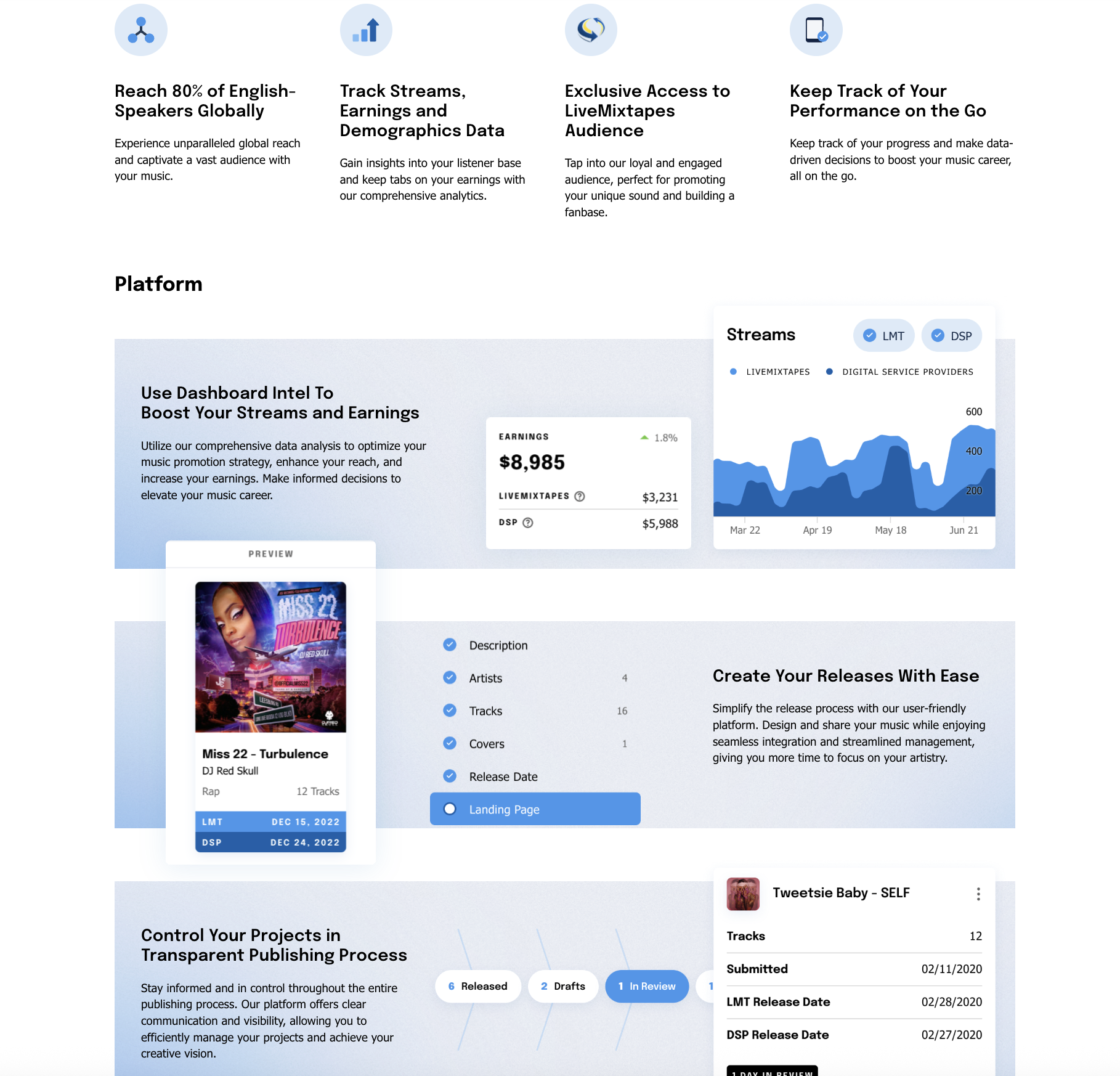
LiveMixtapes has also evolved beyond being simply a website for streaming and downloading free mixtapes. Through its newer LMT Pro platform, independent artists and labels can now distribute releases to LiveMixtapes and major music streaming platforms from one account.

Is LiveMixtapes Still Active?
Yes. LiveMixtapes is still active in 2026 and continues to publish new mixtapes and music releases.
The platform currently features new and trending mixtapes, individual tracks, playlists and releases from independent artists alongside its extensive archive of hip-hop projects.
This makes LiveMixtapes one of the few survivors from the original era of dedicated mixtape websites.
However, the platform has changed significantly since its early days. LiveMixtapes now combines its traditional mixtape discovery website with LMT Pro, a music distribution service created for independent artists and record labels.
Artists can potentially use the service to release music on LiveMixtapes while also distributing eligible releases to platforms including Spotify, Apple Music, YouTube Music, Amazon Music, Tidal, Deezer and other streaming services.
Can Independent Rappers Upload to LiveMixtapes?
Yes, but the process is different from simply creating a free account and immediately uploading a mixtape.
Independent artists and labels can use LMT Pro, the music distribution platform operated by LiveMixtapes.
Through LMT Pro, artists can upload their music, artwork and other release information before submitting the project for approval and distribution.
One of the biggest advantages is that LMT Pro combines access to the existing LiveMixtapes audience with wider music distribution.
How to Upload a Mixtape to LiveMixtapes
The current process for submitting music through LMT Pro is relatively straightforward.
1. Create a LiveMixtapes account
Start by creating an account on LiveMixtapes. Once your account has been created, you can access LMT Pro and its distribution tools.
2. Select an LMT Pro plan
Choose the artist, label or release option that best matches how frequently you intend to release music.
Because LMT Pro is a paid service, I recommend comparing the available plans and costs before submitting your project.

3. Sign the distribution agreement
Before releasing music, artists are required to sign a one-year non-exclusive royalty-sharing agreement.
As with any music distribution or licensing agreement, read the terms carefully and make sure you understand the rights you are granting before signing.
4. Prepare your mixtape for release
You will need to prepare your music files, cover artwork and the required information about your release.
This is also an important point for rappers releasing mixtapes where you are leasing rap beats or samples.
Make sure you have the necessary rights and permissions to commercially distribute the music you upload. Simply calling a project a “mixtape” does not automatically allow you to commercially distribute copyrighted beats or uncleared samples.
5. Upload your music and artwork
Upload your tracks, artwork and other project assets through the LMT Pro dashboard.
Check that your release information is accurate before submitting the project.
6. Submit your release for approval
Once everything has been uploaded, submit your project to LiveMixtapes for review.
After your release has been approved, LiveMixtapes can publish it on the selected release date and distribute it to the eligible streaming platforms included with the service.
Artists can then use the LMT Pro dashboard to monitor streams, audience data and earnings.
Is LiveMixtapes Worth Using in 2026?
I think LiveMixtapes is worth considering, particularly for independent rappers who want to release a mixtape and reach an audience specifically interested in hip-hop.
There are very few traditional mixtape websites left.
DatPiff is no longer operating as the mixtape platform it once was, Spinrilla has closed, and several other websites featured in older versions of this article have either disappeared or moved away from mixtape hosting.
One thing that's immediately clear is that LiveMixtapes receives significantly more overall traffic than its Google organic traffic alone would suggest. While SEMrush estimates the site now attracts roughly 8,000–9,000 monthly organic visits, a substantial decline from its search visibility during its peak around 2017–2018, Similarweb estimates the platform still generates approximately 103,000 monthly visits across all traffic sources.


This suggests LiveMixtapes continues to benefit from strong brand recognition, returning users, direct visits, social media and app usage rather than relying solely on Google Search. Engagement also remains healthy, with visitors averaging 4.77 pages per visit, spending just over 4 minutes per session, and a 40.88% bounce rate—all positive indicators that users are actively exploring the platform once they arrive
LiveMixtapes has done something different.
Instead of abandoning the mixtape model entirely, the company has expanded into music distribution through LMT Pro while continuing to operate its original hip-hop platform.
However, I would not rely exclusively on LiveMixtapes to promote your music.
Uploading a project to a mixtape website or music streaming platform does not guarantee that people will discover it.
If I were releasing a mixtape in 2026, I would consider LiveMixtapes as one part of a wider music marketing strategy that could also include YouTube, social media content, an artist website, email marketing and the promotion of individual songs from the project.
The biggest advantage LiveMixtapes offers is its connection to the original mixtape culture and an existing audience interested in hip-hop music.
For rappers specifically searching for a modern alternative to DatPiff or Spinrilla, LiveMixtapes is probably the closest remaining option to a traditional mixtape website in 2026.
Visit LiveMixtapes: LiveMixtapes Official Website
Learn more about music distribution: LMT Pro
2. MixtapeMonkey – Upload and Promote Independent Mixtapes
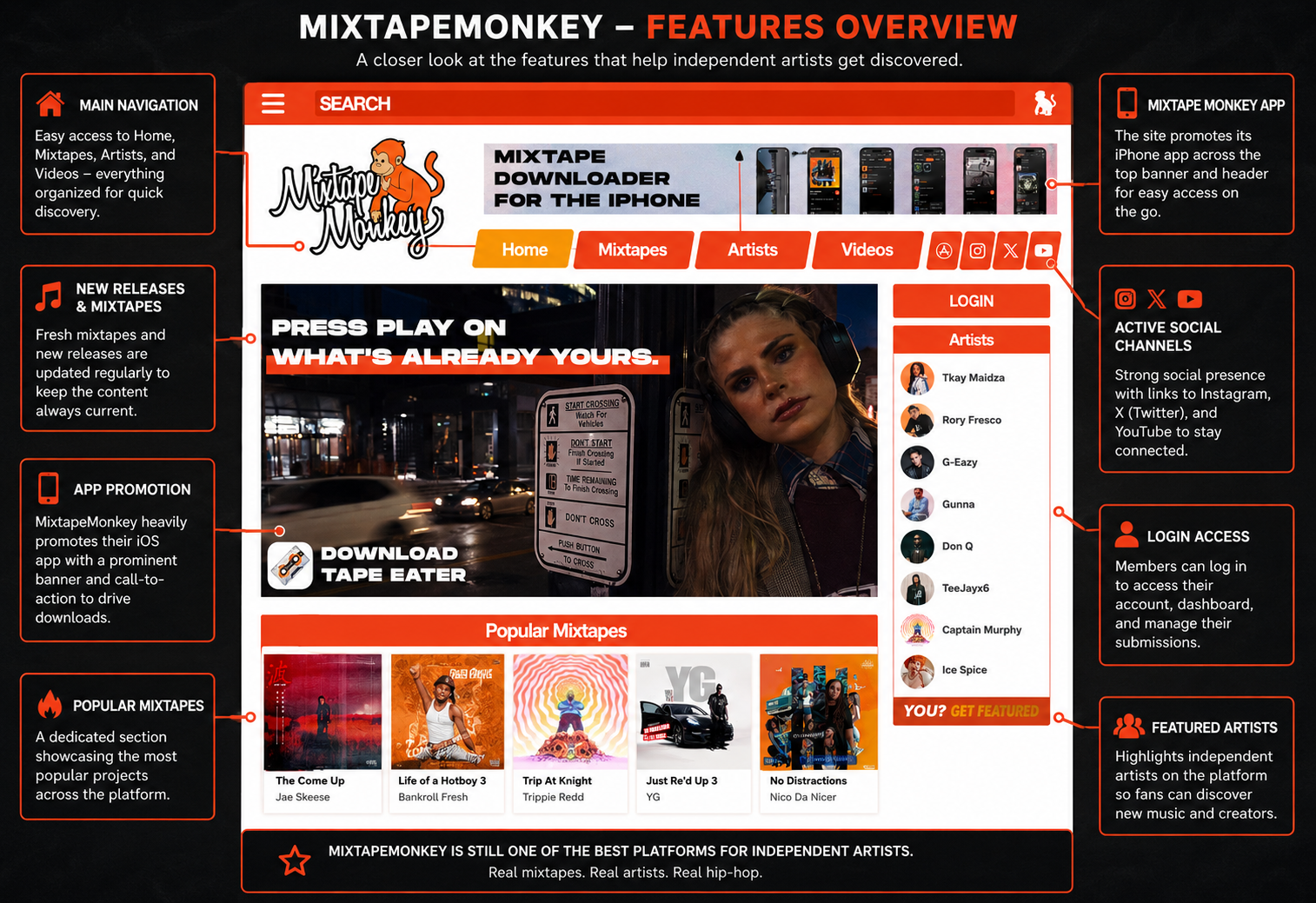
If you're looking for a dedicated mixtape website that still supports independent artists, MixtapeMonkey is one of the last remaining platforms worth considering.
Founded in 2011, MixtapeMonkey has continued to publish new mixtapes, albums and singles while many of the larger platforms from the golden era of mixtapes have either closed or moved in a completely different direction.
Unlike LiveMixtapes, which has expanded into music distribution through LMT Pro, MixtapeMonkey has remained focused on what it originally set out to do helping independent hip-hop artists get their music in front of rap fans.
The website still features newly released mixtapes, trending projects, artist charts, genre pages and a submission process for independent musicians. While the design hasn't changed dramatically over the years, that's arguably part of its appeal. It still feels like a traditional mixtape website rather than another streaming platform.
Is MixtapeMonkey Still Active?
Yes.
MixtapeMonkey is still actively publishing new music in 2026 and continues to feature recently released mixtapes, albums and singles from independent artists.
The homepage is updated with new releases, trending projects and curated collections, while visitors can browse music by artist, genre and popularity.
Unlike several former competitors, MixtapeMonkey has continued operating without completely reinventing itself. The overall design and user experience remain very familiar to anyone who spent time browsing mixtape websites during the late 2000s and early 2010s.
That consistency has helped the platform retain its identity within the hip-hop community.
One thing that genuinely surprised me during my research was how well MixtapeMonkey continues to perform organically.
While LiveMixtapes appears to rely more heavily on direct visitors, returning users, social media and brand recognition than organic search, MixtapeMonkey has quietly built impressive search visibility. According to SEMrush, the website continues to attract approximately 30,000–40,000 monthly organic visits, which is remarkable for such a niche platform.


It's proof that there is still demand for dedicated mixtape websites, even if the overall landscape is much smaller than it was a decade ago.
How to Submit a Mixtape to MixtapeMonkey
Submitting music to MixtapeMonkey is considerably more straightforward than it used to be.
Rather than requiring artists to contact the website directly, MixtapeMonkey now provides an online submission form where independent artists can upload complete projects for review.
The current submission process is:
1. Prepare your release
Before submitting, make sure your project includes:
- Final mastered audio files
- Professional cover artwork
- Artist name
- Mixtape or album title
- Genre
- Release year
The better presented your release is, the more professional it appears during the review process.
2. Complete the submission form
MixtapeMonkey's submission form asks for basic project information, including:
- Email address
- Artist name
- Project title
- Genre
- Release year
You'll also upload your music files and artwork directly through the submission portal.
3. Pay the submission fee
Unlike the early days of free mixtape hosting, MixtapeMonkey now charges a small submission fee for new projects.
At the time of writing, mixtape and album submissions cost $10 USD.
4. Wait for review
Once your submission has been received, the MixtapeMonkey team reviews the project before publishing it on the website.
As with any curated music platform, submitting your music does not automatically guarantee publication.
Does MixtapeMonkey Charge for Submissions?
Yes.
MixtapeMonkey currently charges a $10 submission fee for mixtapes and albums.
The website also offers paid advertising opportunities for artists and businesses looking for additional exposure, including homepage banner placements and display advertising throughout the site.
Compared with many modern music marketing services, the submission cost is relatively modest.
However, I would still encourage artists to focus on the quality of their release rather than viewing any submission platform as a shortcut to success.
Publishing your project is only the first step.
The promotion you do afterwards will almost always have a much bigger impact than where you upload it.
Is MixtapeMonkey Worth Using?
In my opinion, yes.
MixtapeMonkey feels like one of hip-hop's hidden gems.
It doesn't have the huge brand recognition that DatPiff once had, nor has it tried to reinvent itself into a streaming service or full-scale music distributor.
Instead, it has continued serving a niche audience that still enjoys discovering independent mixtapes.
There are definitely areas where the website could be modernised.
Some sections of the design haven't changed much in years, and a visual refresh would improve the overall experience.
At the same time, that's also part of its charm.
When you visit MixtapeMonkey, it still feels like an old-school mixtape website.
That familiarity is something many former DatPiff and LiveMixtapes users will probably appreciate.
From an SEO perspective, I also think it's worth noting that MixtapeMonkey appears to be in a healthier position than many people realise.
While LiveMixtapes has understandably seen its organic visibility decline from the peak years around 2017–2018, MixtapeMonkey has quietly maintained strong search visibility and continues attracting tens of thousands of visitors every month through Google.
That makes it one of the few remaining websites where artists can still benefit from a combination of:
- A dedicated hip-hop audience
- Ongoing organic traffic
- Active new releases
- A straightforward submission process
- More than a decade of brand recognition within the mixtape community
Would I build my entire release strategy around MixtapeMonkey?
No.
But would I include it as part of a wider launch plan alongside YouTube, Spotify, SoundCloud, Audiomack and my own artist website?
Absolutely.
For independent rappers releasing a mixtape in 2026, MixtapeMonkey remains one of the most worthwhile surviving platforms from the original mixtape era.
What Happened to the Biggest Mixtape Websites?
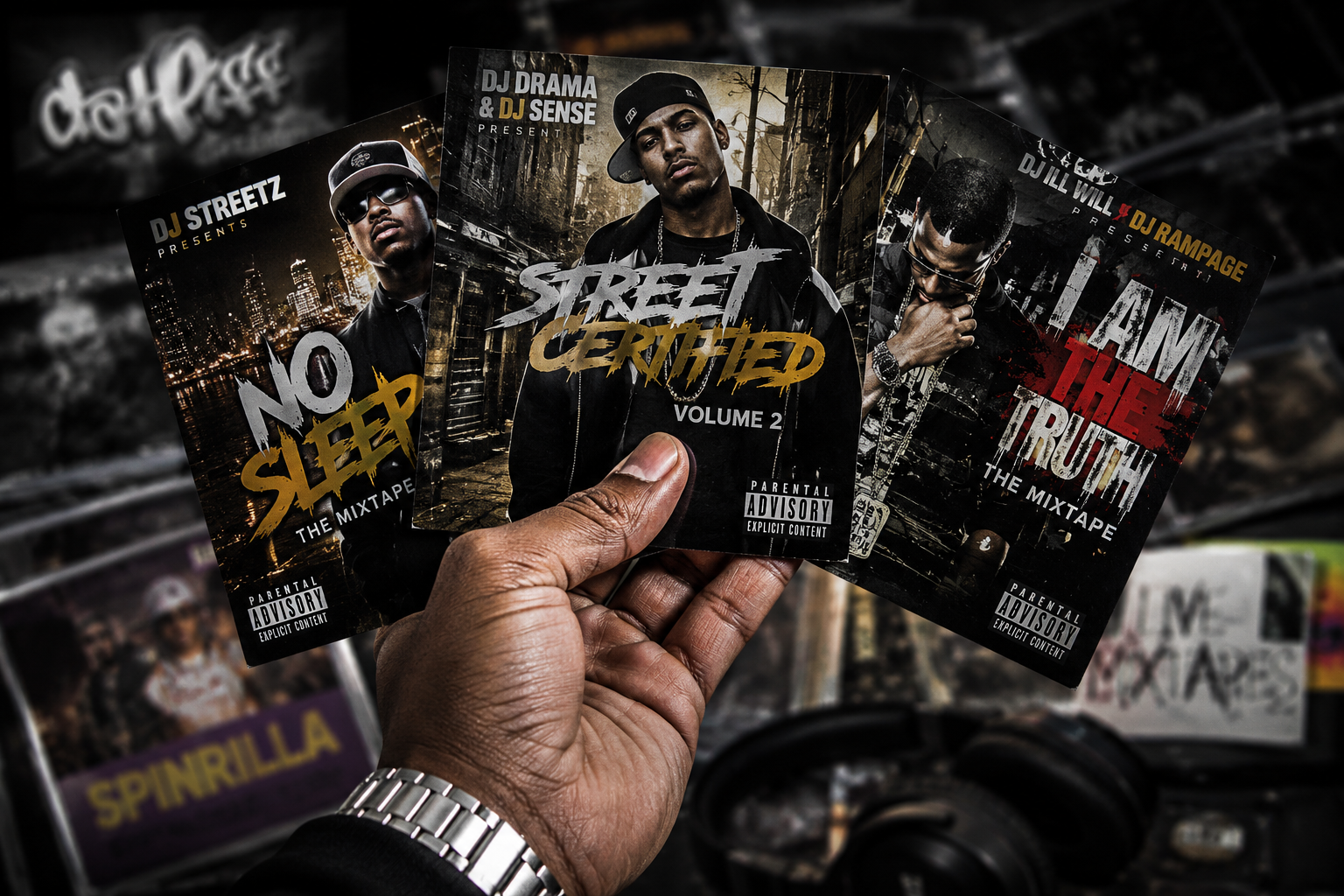
During the late 2000s and early 2010s, websites like DatPiff, LiveMixtapes, Spinrilla, HotNewHipHop and MyMixtapez became the go-to destinations for discovering and promoting hip-hop music.
Millions of fans downloaded free mixtapes from artists such as Lil Wayne, Meek Mill, Wiz Khalifa, Future and J. Cole, making these platforms an essential part of hip-hop culture.
However, the rise of Spotify, Apple Music, YouTube Music and other streaming services dramatically changed the landscape. Some mixtape websites shut down completely, others evolved into music blogs or distribution platforms, while only a handful continue to support independent artists today.
Below, I'll explain what happened to each of the major mixtape websites and whether they're still worth using in 2026.
What Happened to DatPiff?
For much of the late 2000s and early 2010s, DatPiff wasn't just another mixtape website—it was the mixtape website.
If you were an independent rapper trying to build a following online, getting your music onto DatPiff was often considered a milestone. The platform helped launch and grow the careers of artists including Lil Wayne, Wiz Khalifa, Meek Mill, Curren$y, Waka Flocka Flame, Big K.R.I.T., Young Dolph and countless others.
Unlike traditional album releases, DatPiff gave artists the freedom to release mixtapes, freestyles and promotional projects directly to fans without waiting for record labels or retail distribution. It became one of the defining platforms of the mixtape era and helped change how hip-hop music was discovered online
Video Recommendation
If you'd like to learn more about DatPiff's rise and eventual decline, I highly recommend watching this excellent breakdown by Eleven 11. It's one of the most insightful videos I've found on the subject and does a fantastic job explaining the platform's history and the events that led to its downfall.
Why DatPiff Became So Important
DatPiff arrived at exactly the right time.
Before Spotify and Apple Music became mainstream, discovering new hip-hop music usually meant browsing blogs, forums or downloading individual MP3 files from dozens of different websites.
DatPiff simplified that entire experience.
Fans could stream or download complete mixtapes for free, while artists suddenly had a national audience instead of relying solely on local DJs or physical CDs.
The platform quickly became known for offering:
- Free mixtape downloads
- Exclusive artist releases
- Trending mixtape charts
- Verified artist profiles
- Millions of active hip-hop listeners
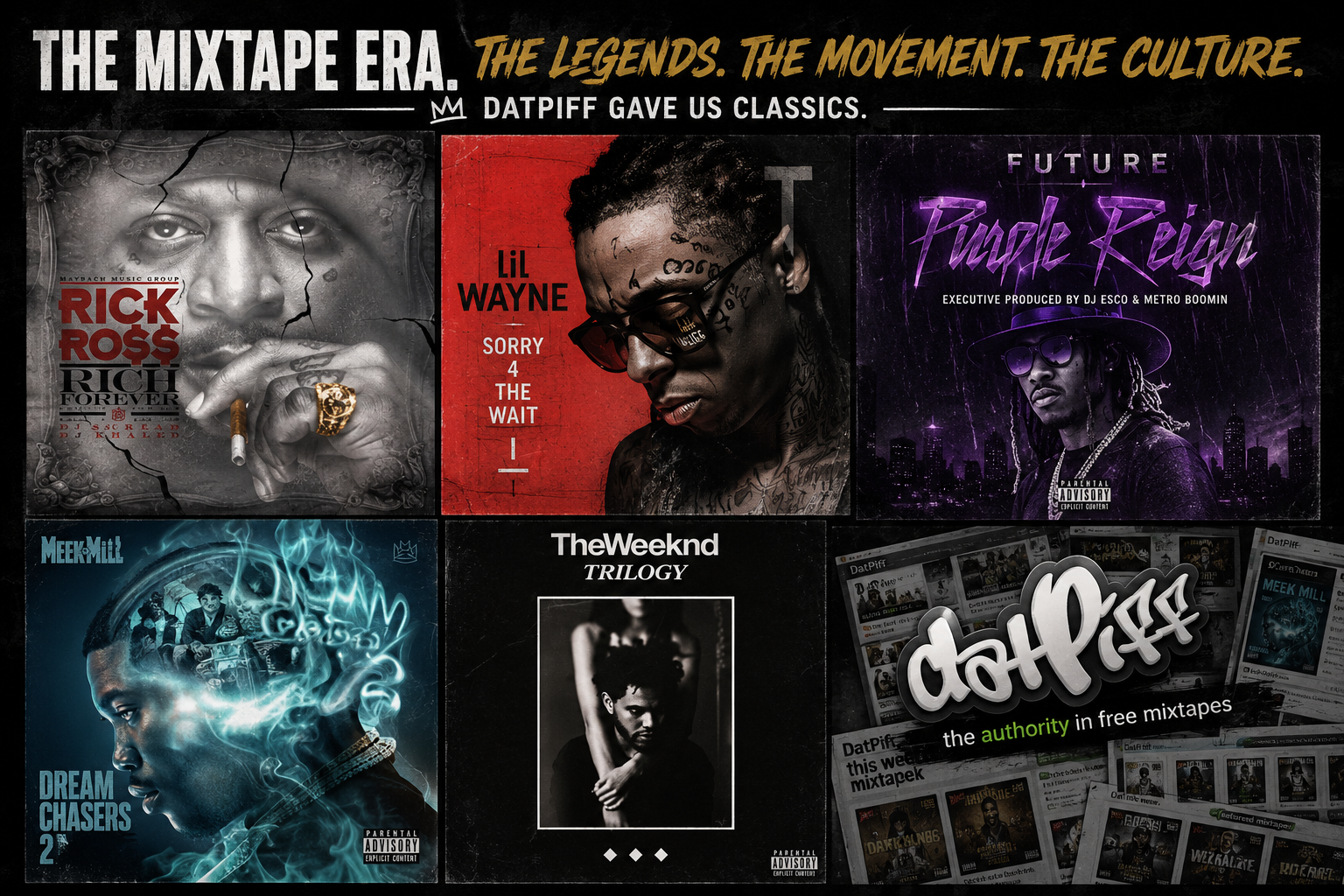
During its peak years, many artists actually chose to release mixtapes on DatPiff instead of selling music, understanding that building a fanbase would generate more long-term value through touring, merchandise and future commercial releases.
What Went Wrong?
The decline of DatPiff wasn't caused by one single event.
Instead, several industry changes happened at roughly the same time.
Streaming services like Spotify, Apple Music and YouTube Music became the preferred way for listeners to consume music. At the same time, artists increasingly wanted official streaming royalties rather than simply giving away free projects.
The distinction between a "mixtape" and an "album" also became far less clear.
Many artists who previously released free mixtapes started putting those same projects directly onto streaming platforms where they could generate income.
DatPiff also faced ongoing copyright challenges because many mixtapes contained uncleared beats, remixes and samples that couldn't easily exist within today's licensed streaming ecosystem.
The MediaLab Acquisition
In 2019, DatPiff was acquired by MediaLab, the technology company behind several well-known online brands.
At the time, the acquisition appeared positive.
Many people expected additional investment, technical improvements and a modernised platform that could compete with today's music services.
However, former DatPiff co-founder Kyle "KP" Reilly has since said publicly that he believed the platform never received the level of technical support or music-industry focus it needed after the acquisition. Those comments represent Reilly's perspective; MediaLab has not publicly provided a detailed response explaining its internal priorities or decisions.
Server Outages and the Beginning of the End
By 2023, users began experiencing widespread technical issues.
The DatPiff app disappeared.
The website became increasingly unreliable.
Many classic mixtapes became inaccessible as server outages continued.
For artists and fans, it became obvious that DatPiff was no longer operating like the platform they had relied on for nearly two decades.
The Internet Archive Partnership
Rather than disappearing entirely, much of DatPiff's historic catalogue was preserved through a partnership with Internet Archive.
Today, visitors to the DatPiff website are redirected toward archived releases instead of the fully functioning mixtape platform that once existed.
This is good news for hip-hop history because many classic mixtapes remain accessible.
However, an archived library is very different from an active music community where artists can upload new projects, build an audience and interact with fans.
Can You Still Upload Mixtapes to DatPiff?
No.
DatPiff no longer operates as an active mixtape upload platform.
While the DatPiff brand still exists, the original submission system that helped launch thousands of independent artists is no longer available.
The website now primarily serves as a gateway to archived content, and there is currently no confirmed timeline for the return of a fully functioning upload platform or mobile app.
Is DatPiff Coming Back?

DatPiff has stated that it intends to develop a next-generation version of the platform.
However, beyond those announcements, very little public information has been shared regarding when—or if—a full relaunch will happen.
As things stand today, independent artists should not rely on DatPiff as part of a release strategy.
What Happened to Spinrilla?
For many hip-hop fans, Spinrilla was one of the biggest alternatives to DatPiff during the 2010s.
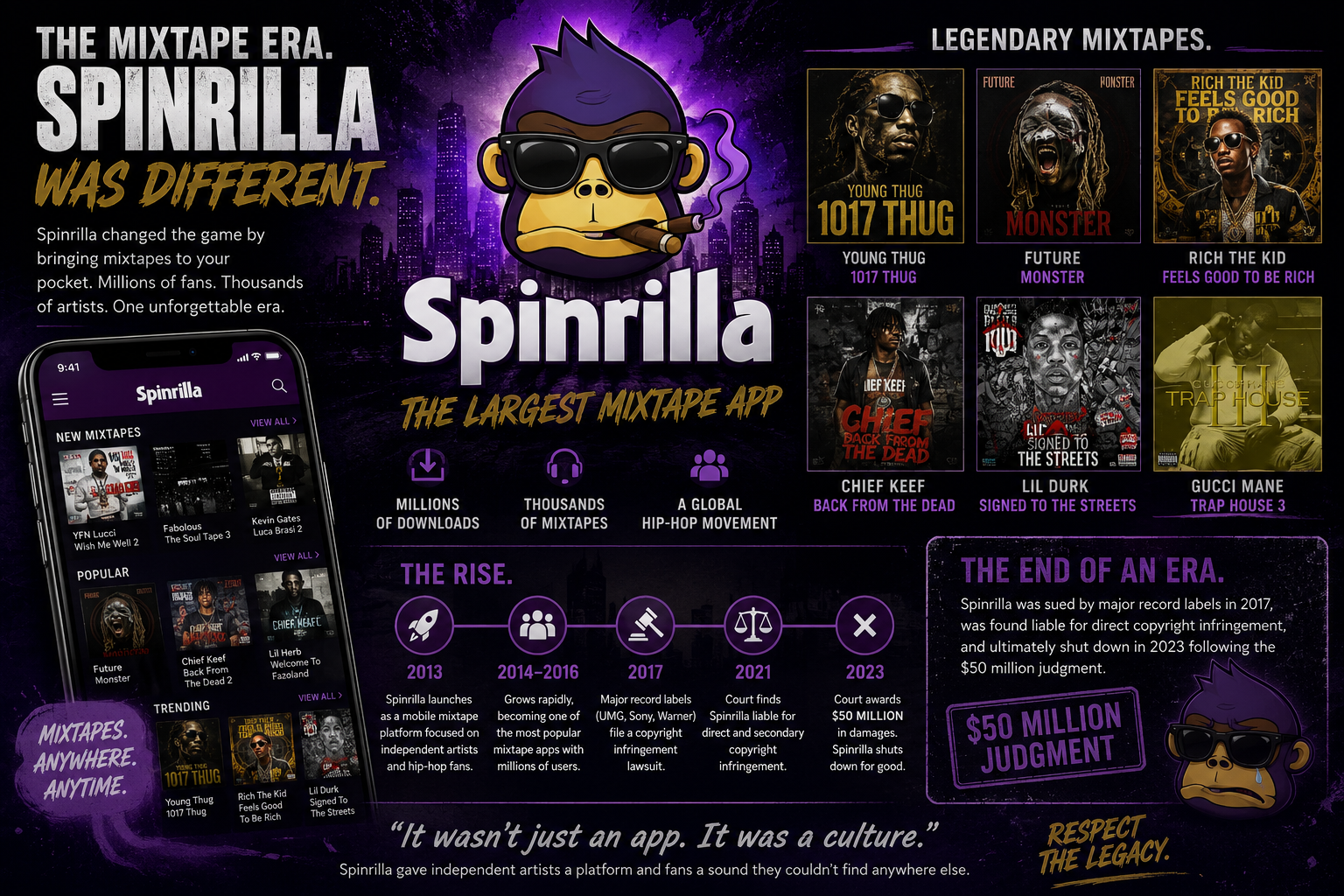
Launched in 2013, the platform focused on streaming and discovering mixtapes through both its website and mobile app. Unlike many earlier mixtape websites that relied heavily on downloads, Spinrilla embraced the shift toward mobile listening, making it easy for fans to stream new projects wherever they were.
The platform quickly became popular with independent rappers and major artists alike, helping millions of listeners discover new music during the streaming era.
Why Spinrilla Became So Popular
Spinrilla arrived at a time when smartphones were rapidly changing how people consumed music.
Its clean interface, dedicated mobile app and extensive mixtape catalogue made it one of the most popular hip-hop platforms of its generation. By the late 2010s, the service had millions of registered users and hosted a huge collection of mixtapes from both emerging and established artists.
For independent rappers, Spinrilla offered another opportunity to get music in front of an audience that was actively looking for new hip-hop releases.
Spinrilla markets itself as a platform that allows users to discover independent and emerging hip-hop artists, and only certain pre-approved users have the ability to upload music to the site. (Of the 19 million registered users, it’s estimated that only about 14,000 have upload privileges.) Source HollywoodReporter.com
The Copyright Lawsuit
Despite its popularity, Spinrilla faced significant legal challenges.
In 2017, the major record labels—including Warner Music Group, Sony Music Entertainment and Universal Music Group—filed a lawsuit alleging that Spinrilla had built its platform around copyrighted recordings without obtaining the necessary licences.
The labels argued that Spinrilla knowingly hosted and distributed infringing music while continuing to profit from advertising and subscriptions.
Spinrilla maintained that it responded to copyright complaints and removed infringing content when notified. However, the dispute continued through the courts for several years.
The Court's Decision
In 2023, a U.S. federal court ruled largely in favour of the record labels.
The court found Spinrilla liable for direct copyright infringement, along with contributory and vicarious copyright infringement relating to thousands of copyrighted recordings.
Following the decision, the court awarded approximately $50 million in statutory damages against the company.
The judgment effectively brought an end to Spinrilla's business as an independent mixtape platform.
The Shutdown
Shortly after the court ruling, Spinrilla officially shut down in 2023.
Its website and mobile application ceased operating, ending more than a decade as one of hip-hop's largest mixtape platforms.
Unlike DatPiff, whose catalogue has largely been preserved through the Internet Archive, Spinrilla's shutdown was much more abrupt, leaving artists and fans without access to much of the music that had been hosted on the platform.
Can You Still Upload Music to Spinrilla?
No.
Spinrilla is no longer operating, and artists cannot upload new mixtapes or music to the platform.
If you're researching where to release a mixtape today, you'll need to look at alternatives such as LiveMixtapes or MixtapeMonkey, alongside modern streaming platforms like Spotify, Apple Music and YouTube Music.
Can You Still Upload Mixtapes & Music to MyMixtapez?
Yes—but not in the way you could during the platform's peak years.
When MyMixtapez launched in 2012, it quickly became one of the biggest names in hip-hop alongside DatPiff, LiveMixtapes and Spinrilla. Its mobile app attracted more than 10 million downloads, giving independent artists another major platform where fans could discover, stream and download new mixtapes.
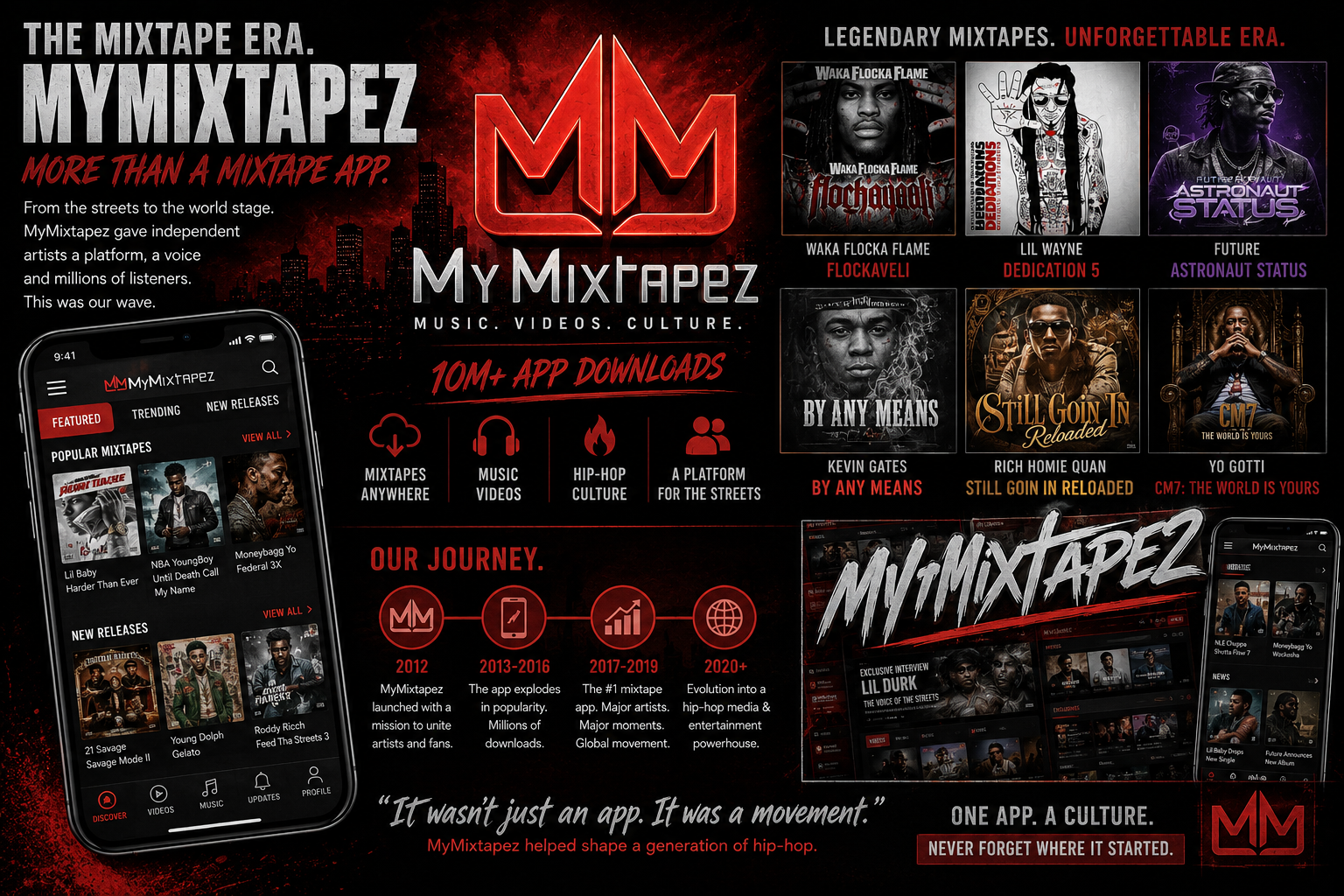
Today, both the MyMixtapez website and mobile app are still active, but the platform has evolved considerably.
Rather than operating as a traditional mixtape website—where artists upload a project, fans download it and it climbs the mixtape charts—MyMixtapez has transformed into a much broader hip-hop media and entertainment platform. The homepage is now dominated by breaking hip-hop news, culture, videos, interviews, artist features and editorial content, similar to websites like WorldStarHipHop, HipHopDX or Complex.
That doesn't mean independent artists have been forgotten.
MyMixtapez still accepts music submissions through its dedicated submission portal, where artists can submit tracks for editorial review. According to the company, standout releases may be considered for editorial features, playlists and social media promotion. However, this is a curated process rather than the open upload-and-discover model that originally made mixtape websites so popular.
In other words, the workflow has changed:
Then (2012–2018)
- Upload your mixtape.
- Fans discover it organically.
- Downloads and plays drive visibility.
- Build momentum through the charts.
Today
- Submit your music for editorial consideration.
- If selected, MyMixtapez may feature it across its website, app or social channels.
- The emphasis is now on editorial promotion and hip-hop media coverage, rather than functioning as a public mixtape hosting platform.
My Thoughts
I was genuinely surprised by how much MyMixtapez has changed.
There was a time when it was one of the biggest mixtape apps in hip-hop, and for many artists it was every bit as important as DatPiff or Spinrilla. Today, it feels like the brand has successfully reinvented itself rather than disappearing altogether.
If your goal is simply to upload a mixtape and let fans browse and download it, LiveMixtapes and MixtapeMonkey are now much closer to what MyMixtapez used to be.
However, if you're looking for editorial exposure, hip-hop news coverage and the possibility of being featured by an established media brand, MyMixtapez is still worth submitting to. It has evolved with the industry, and while the classic mixtape experience is largely gone, the platform continues to play a meaningful role in hip-hop discovery and promotion.
Final Thoughts: Mixtapes Aren't Dead, But Mixtape Websites Have Changed
The golden era of mixtape websites has undoubtedly come to an end. Platforms like DatPiff and Spinrilla defined hip-hop discovery throughout the 2000s and 2010s, but today they exist only as part of hip-hop history. Other platforms have evolved into media brands or changed direction entirely, reflecting how music consumption has shifted over the last decade.
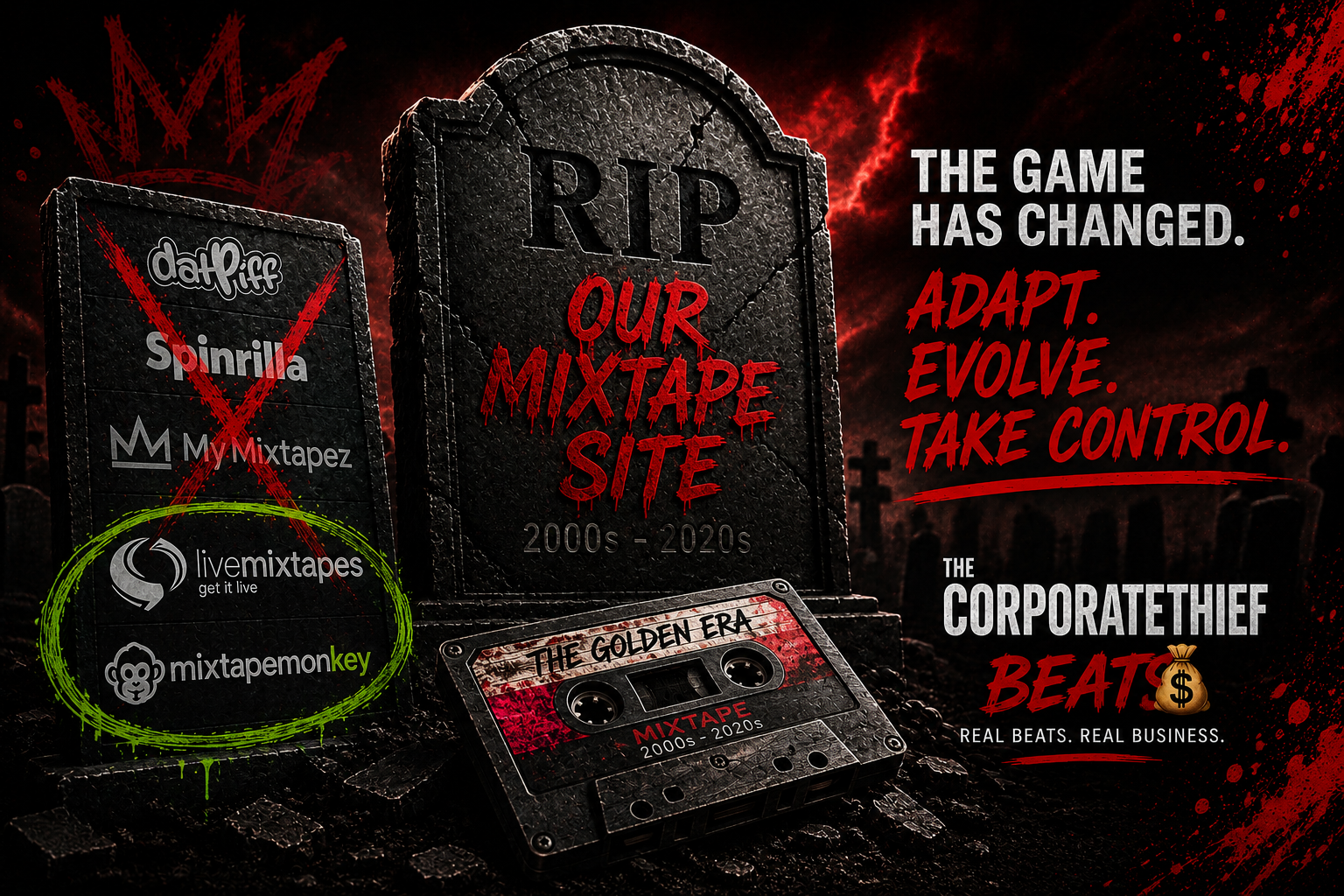
That doesn't mean mixtapes are dead it simply means the way artists release and promote them has changed.
If you're looking for a traditional mixtape experience, LiveMixtapes and MixtapeMonkey remain two of the strongest options still available. At the same time, platforms such as Audiomack, SoundCloud, YouTube, Bandcamp, Spotify, and Apple Music give independent artists more opportunities than ever before to distribute music and reach listeners around the world.
The biggest lesson is that uploading a mixtape to a single website and hoping it goes viral is no longer a realistic marketing strategy. Today's successful independent artists treat every release as a campaign, using multiple platforms to maximize reach while creating content that keeps listeners engaged long after launch day.
If I were releasing a mixtape in 2026, I'd submit it to LiveMixtapes or MixtapeMonkey for exposure within the remaining mixtape community, distribute the commercial release to Spotify and Apple Music through a distributor, upload supporting content to YouTube, share previews on SoundCloud and Audiomack, and most importantly, build everything around my own artist website and email list.
Owning your audience means you're never dependent on the successor failure of any single platform.
The mixtape landscape may look very different today, but one thing hasn't changed: great music still finds an audience. The artists who succeed are the ones who combine quality music with a smart, diversified promotion strategy that continues long after release day.
